
Our Story
Sugar was part of Waimānalo long before we were.
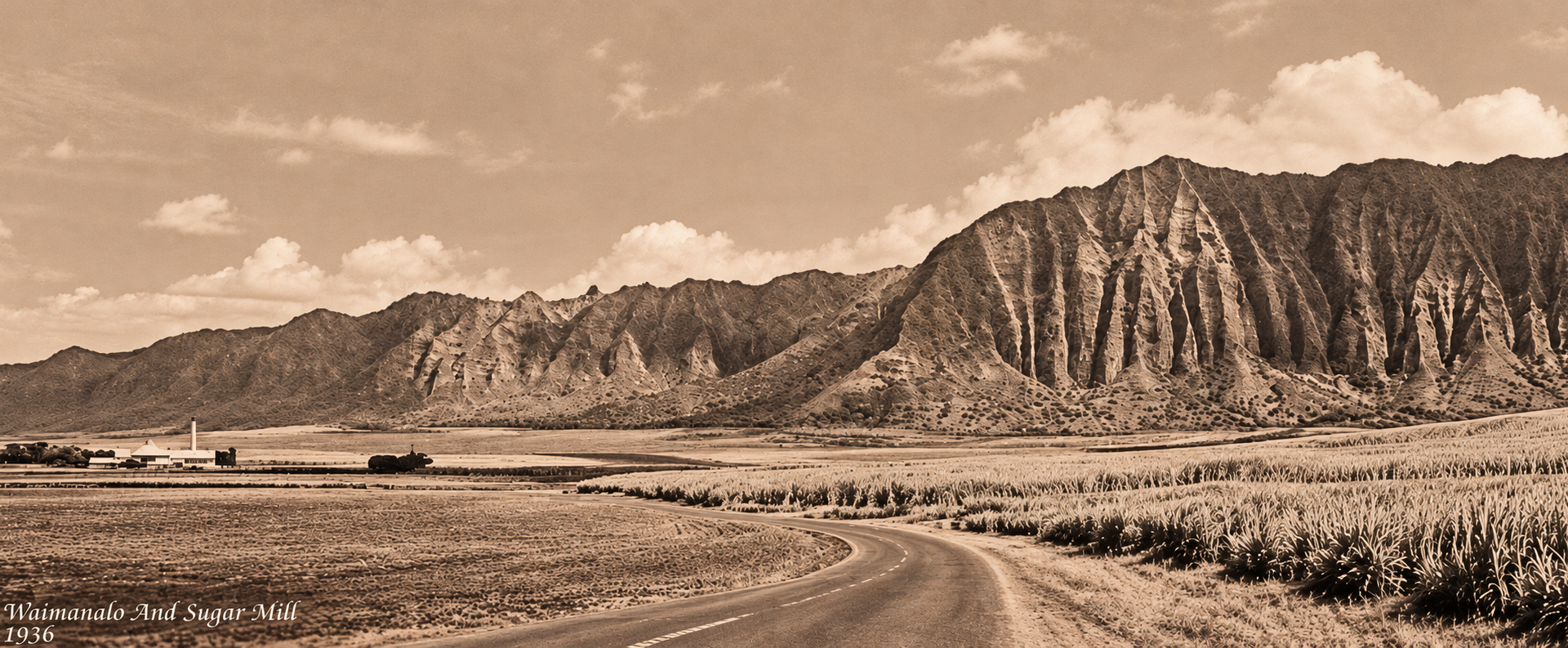
Waimānalo's sugar story began in the late 1800s, when the Waimānalo Sugar Company turned much of the area into cane fields and built a mill that shaped the local landscape for decades.
Sugar was more than a crop here. It brought rail lines, workers, buildings, and an industry that became part of daily life in Waimānalo. The plantation eventually closed in 1947, and most of that world has disappeared from the landscape.
But not completely. A few photographs, place names, and traces of the old plantation still tell the story of just how much sugar once moved through this little corner of Oʻahu.
Our Story
Sugar was part of Waimānalo
long before we were.
Waimānalo's sugar story began in the late 1800s, when the Waimānalo Sugar Company turned much of the area into cane fields and built a mill that shaped the local landscape for decades.
Sugar was more than a crop here. It brought rail lines, workers, buildings, and an industry that became part of daily life in Waimānalo. The plantation eventually closed in 1947, and most of that world has disappeared from the landscape.
But not completely. A few photographs, place names, and traces of the old plantation still tell the story of just how much sugar once moved through this little corner of Oʻahu.
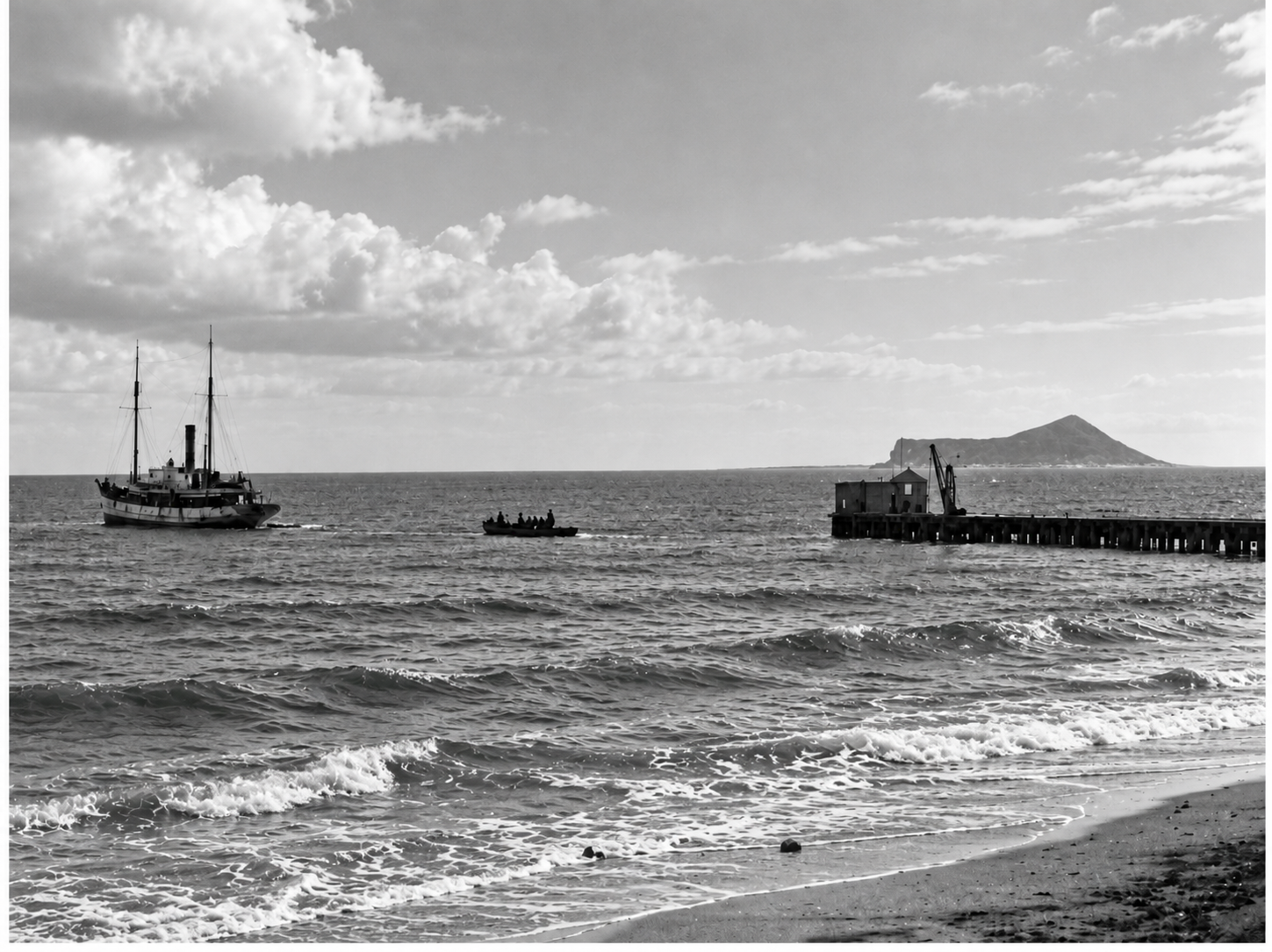
The old landing was just down the shore.
The old Waimānalo landing once stretched out into the water not far from where Sugar Shore is today. Sugar from the plantation made its way from the fields and mill to this pier, where it was loaded aboard ships and sent on its way. The pier is gone now, the plantation is gone. But less than a quarter mile from where this photograph was taken, sugar is being cooked again.
Our version happens in small batches, pulled and shaped by hand, with considerably more attention paid to whether lychee belongs with guanabana, whether lavender has gone too far, and whether something needs just one more drop of whatever got us into trouble in the first place. Most of our flavors start somewhere familiar, then wander a little off course. We test them, adjust them, make them again, and keep pushing until they become something worth putting on the menu. Some ideas work immediately, some need persuasion. A few get taken out back and are never spoken of again.
Why Sugar Shore?
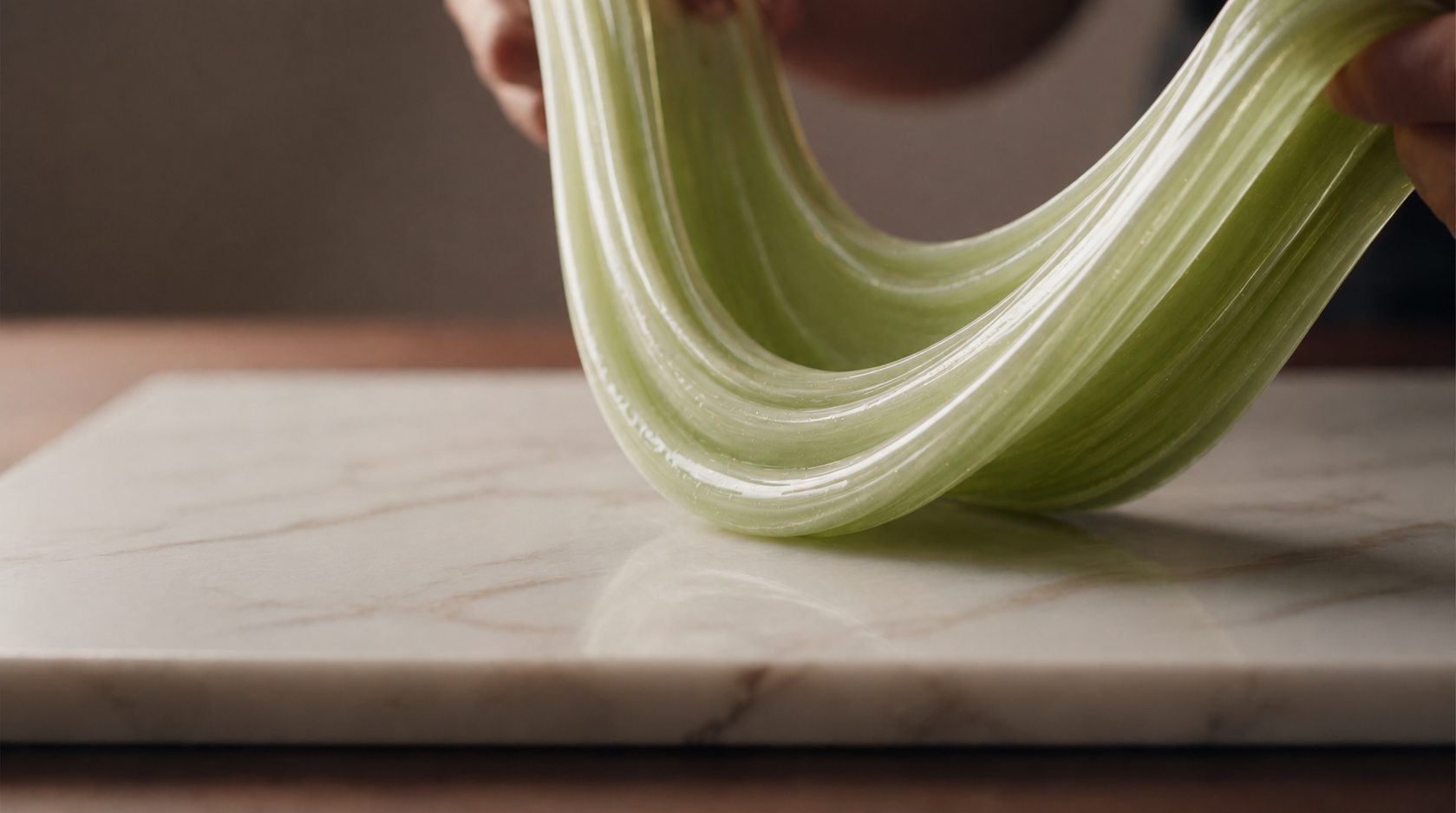
We make candy the way it used to be made — by hand, in small batches, with real ingredients and a little obsession. Every piece is pulled, poured, or shaped here in Waimānalo.
Handmade
(every batch)
No machines, no shortcuts. Every piece is shaped by hand.
Small-batch only
We make less so every batch stays fresh and intentional.
Real ingredients
Quality fruit, local inspiration, and nothing artificial.
Made in Waimānalo
Rooted in Hawaiʻi, inspired by everywhere we've been.